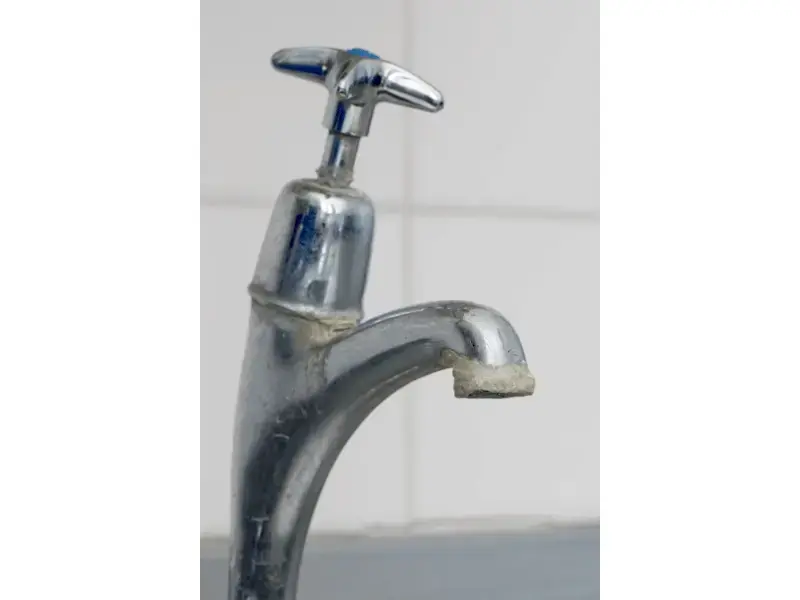
Quick Answer: Calcium build up on faucet happens because hard water carries dissolved calcium and magnesium that stay behind when water evaporates. Those minerals turn into white residue, chalky buildup, limescale, and stubborn mineral deposits around faucet openings, handles, and aerators. Over time, the same process can also affect pipes, fixtures, showerheads, and even a water heater, reducing water flow and causing long-term plumbing wear. If the buildup returns quickly after cleaning, the issue is usually not the faucet alone but the mineral content in the home’s water supply. The best long-term fix is to address the water quality while also cleaning and protecting the affected fixture.
What Calcium Build Up on Faucet Really Means
Calcium build up on faucet usually means your home has mineral-heavy water, and the faucet is simply the first visible place where that problem shows itself. It is not just a cosmetic stain. It is evidence that dissolved minerals are drying onto your plumbing surfaces every day.
In most homes, the minerals come from groundwater or a municipal source that contains natural hardness. As water moves through the plumbing system, tiny amounts remain on the outer surface of faucets, around handles, and inside the outlet screen. When the water evaporates, it leaves behind mineral deposits that slowly harden into limescale and scale buildup.
That is why homeowners in Indianapolis, Carmel, Fishers, Greenwood, and Broad Ripple often notice the problem first on kitchen or bathroom fixtures. A visible crust on the outside can also point to sediment buildup in pipes or hidden mineral accumulation deeper in the system, especially in older homes.
Why Hard Water Causes This Problem
Hard water causes mineral buildup because it contains elevated levels of dissolved calcium and magnesium. These minerals are not dangerous to drink, but they are rough on plumbing surfaces and household equipment over time.
When hard water reaches a faucet, a small amount stays on the metal after every use. That is enough to create repeated drying cycles, and each cycle adds another thin layer of scale. In the beginning, it may look like a harmless spot. After months or years, it can turn into obvious calcium build up on faucet that affects appearance and performance.
This is also why the issue often spreads beyond one room. If you see buildup on one faucet today, you may later find it on showerheads, sink edges, and appliance connections, because the whole house is receiving the same mineral-heavy water.
Where the Deposits Start First
The earliest buildup usually forms at faucet tips, outlet holes, and aerators because those areas hold droplets that evaporate slowly. Those tiny droplets leave concentrated mineral traces behind, which gradually harden into visible crust.
If you notice calcium build up on sink faucet edges or around the spout base, that is usually because the surface stays damp between uses. The same thing happens around seams, sprayer outlets, and decorative trim where water sits for a little longer than it should.
A lot of homeowners wipe the surface and assume the problem is solved, but a returning crust often means the mineral source is still active. That is where advice from a best Water Filtration System specialist can help if you want to solve the cause instead of just repeating surface cleaning.
How Calcium Build Up on Faucet Changes Water Flow
Calcium build up on faucet changes performance by blocking the small openings that control spray pattern and volume. Even a light layer inside the outlet can reduce water flow enough to make a faucet feel weaker.
The problem is most obvious when scale clogs aerators. Once the openings narrow, water comes out unevenly, splashes unpredictably, or feels noticeably weaker than before. Homeowners often describe this as lower water pressure, but the more precise problem is restricted water flow at the fixture itself.
If the buildup is not just at the outlet but also inside older supply lines, it can contribute to reduced water pressure throughout the room. In more advanced cases, hard water calcium buildup in pipes can make the issue feel house-wide rather than isolated to one faucet.
Check the aerator before replacing the faucet
A quick and often effective first step is removing and cleaning the aerators before assuming the faucet has failed. Many faucets with poor performance still have a healthy body and valve, but the outlet screen is packed with hardened scale.
Tip: If cleaning the aerator improves flow only for a few days, the deposits are likely reforming because the water source is still too mineral-heavy.
Can Calcium Buildup Damage the Faucet Itself?
Yes, it can. Mineral scale can damage finishes, clog moving parts, trap moisture, and increase wear on internal components. Over time, what starts as a white crust can contribute to drips, sticking handles, and shorter fixture life.
That is why some homeowners eventually describe the fixture as a faucet corroded by hard water. While the scale itself is not the same thing as metal damage, it creates conditions that support corrosion, surface staining, and trapped moisture. In older or lower-quality fixtures, this can lead to rust, weakened parts, and slow-developing leaks.
As the damage grows, the faucet may need repair sooner than expected, and in some cases even premature replacement if scale has been ignored for too long. This is especially common in homes where multiple fixtures are affected but the underlying water issue has never been corrected.
The Bigger Plumbing Problem Behind Faucet Scale
Faucet scale is often the visible symptom of a larger mineral problem in the home. If the outside of the faucet is coated, the inside of the plumbing may also be collecting scale over time.
Inside the system, hard water leaves deposits along the walls of pipes, valves, connectors, and branch lines. Those minerals do not always create an instant blockage, but they do slowly reduce the working space inside the line. As that happens, the home may start to notice slower fill times, weaker performance at upper floors, or more strain on high-use plumbing fixtures.
This is why calcium build up on faucet should be viewed as a plumbing warning sign, not only a cleaning chore. What you can see on the outside is often just the easiest part to spot.
Recurring fixture scale sometimes needs an affordable Residential Plumbing export to inspect the broader system, especially if more than one room is affected.
How Hard Water Affects Fixtures and Visible Surfaces
Hard water affects the visible parts of your home long before a major plumbing failure happens. It leaves scale on faucets, clogs showerheads, stains metal surfaces, and creates cleaning problems that keep returning.
One of the most common symptoms is white residue around faucet tips or bases. Another is chalky buildup on polished finishes that makes the fixture look old even when it is not. In bathrooms, hard water also combines with soap to create soap scum, a stubborn film that sticks to sinks, walls, and glass.
The result is more than just appearance. These surface problems take more effort to clean, dull the finish, and often come back quickly if the mineral content in the water has not changed.
Why Appliances Also Struggle With Hard Water
Faucets are only one part of the story. The same minerals that form visible scale can also collect inside appliances, especially anything that heats water or uses small spray openings.
The water heater is one of the hardest-hit appliances in the house because heat speeds up mineral separation. As water warms, dissolved minerals settle more easily and may combine with sediment inside the tank. In tank-style units, that buildup can collect near the bottom and around heating elements, lowering performance and making the system work harder.
Other affected appliances include dishwashers, washing machines, and ice makers. In these appliances, mineral deposits can reduce spray quality, slow fill performance, or leave visible signs like cloudy dishes and dingy clothing after wash cycles.
As this continues, utility bills rise and energy efficiency falls, because the equipment needs more time and effort to do the same job.
Signs Hard Water Is Affecting More Than One Faucet
If the problem is not limited to one sink, it is usually a whole-house water issue rather than a single bad fixture.
- White residue on multiple faucets
- Weak spray or clogging in showerheads
- Stiff handles or recurring drips
- More visible soap scum on bathroom surfaces
- Slower hot water delivery from the water heater
- Spotting, film, or cloudy dishes after dishwasher cycles
These signs matter because recurring calcium build up on faucet usually means the mineral content is affecting more than the outside of one fixture.
Why Soap, Laundry, and Dishes Look Worse Too
Hard water makes soap less effective because the minerals react with detergents and leave behind residue instead of letting the cleaner rinse away easily. That is why hard water problems often show up in the kitchen and laundry room as well as on plumbing fixtures.
When minerals interfere with cleaning, glassware spots more easily, laundry feels stiff, and surfaces develop filmy deposits. This is why households with scale problems often also notice dingy clothing, harder-to-rinse sinks, and more product use than usual.
If your faucet scale problem comes with dull dishes and increased cleaner use, it is almost always part of the same water-hardness pattern rather than a separate issue.
What You See and What It Usually Means
What You Notice | Most Likely Cause | What It Affects |
White crust on faucet tip | limescale and mineral deposits | faucet outlet and aerators |
Weak spray pattern | clogged outlet from scale buildup | water flow and faucet performance |
Spots on metal finish | drying minerals from hard water | faucet appearance and cleaning time |
Repeated chalky film | untreated hard water source | multiple fixtures |
Hot water side feels weaker | mineral and sediment buildup | water heater and hot-side plumbing |
Glassware still looks dirty | mineral-rich water leaving film | dishwashers and kitchen cleaning |
How to Clean Calcium Build Up on Faucet
The best way to clean light to moderate buildup is to dissolve it gently before scrubbing. That means using a method that loosens the deposits without damaging the finish.
Safe cleaning steps
- Turn off the faucet and dry the surface first.
- Remove the aerators if your fixture allows it.
- Soak removable parts in white vinegar for 30 to 60 minutes.
- Wrap a vinegar-soaked cloth around the spout if surface deposits are thick.
- Use a soft brush to remove loosened scale.
- Rinse thoroughly and reinstall the parts.
- Test the spray pattern and flow after reassembly.
This is the simplest answer of cleaning calcium build up in faucets when the problem is mostly external or limited to the outlet.
Clean early, not after it hardens for months
A vinegar-based cleanup works best before the scale turns rock-hard. Once deposits thicken heavily inside the faucet, cleaning may help but not fully restore the original performance.
Tip: Avoid knives, steel wool, or harsh scraping on plated finishes. Scratched surfaces collect new scale even faster.
How to Remove Calcium Build Up on Faucet
To remove heavier buildup, you need to clean both the visible crust and the hidden deposits inside the outlet or nearby parts. Surface wiping alone rarely solves recurring scale.
If the faucet still performs poorly after external cleaning, the next step is disassembling removable components and checking for clogged passages. In many cases, homeowners asking methods to remove calcium build up on faucets are dealing with deposits packed into the screen, outlet ring, or internal path right behind the aerator.
This is also where severe scale may reveal older wear, loose seals, or rough metal edges that trap minerals more easily. If the same fixture keeps failing after cleaning, replacement parts or wider plumbing treatment may be necessary.
How to Get Rid of Calcium Build Up on Faucet
To get rid of recurring buildup, you must reduce the minerals coming into the home, not just clean the faucet surface. Otherwise the same pattern will return again and again.
This is the real answer to how to get rid of calcium build up on faucet for the long term. You can descale the fixture today, but if untreated hard water keeps flowing through tomorrow, new scale will start forming almost immediately.
A water softener is usually the most effective whole-home solution because it addresses the source. In homes with persistent scaling across rooms, a whole-home water softener can protect faucets, appliances, and hot-water equipment at the same time.
Why Water Softeners Help So Much
Water softeners work by reducing the hardness minerals that cause scale in the first place. Most traditional systems use ion exchange, a process that swaps hardness minerals for softer ions before the water enters the house plumbing.
That means less calcium, less magnesium, and far fewer new deposits on faucet surfaces, inside valves, and around heating elements. Instead of fighting the symptoms every week, the home begins receiving water that is far less likely to leave scale behind.
This is why a water treatment solution often does more than improve fixture appearance. It also protects appliances, supports longer equipment life, and helps reduce the chance of premature replacement of affected plumbing parts.
How to Prevent Calcium Buildup in Pipes
Preventing buildup in plumbing means reducing mineral content before the water enters your system, maintaining hot-water equipment, and catching early signs before deposits become heavy restrictions.
Long-term prevention steps
- Test the hardness level of your household water.
- Install a water softener or other appropriate treatment system.
- Clean faucet outlets and aerators regularly.
- Flush the water heater to reduce mineral sediment.
- Check high-use fixtures for early signs of scale.
- Replace worn components if scale has damaged seals or parts.
- Watch for changes in spray pattern or reduced water pressure.
- Address multiple affected fixtures before buildup spreads farther.
This is the most practical answer to prevent calcium buildup in pipes and fixtures before the deposits start lowering system performance.
Three paragraphs after the previous internal keyword is a natural place for the last one: if the same problem keeps showing up across multiple rooms, a trusted local plumbing company can help determine whether the issue is mainly external scale, internal pipe restriction, heater buildup, or all of them together.
Symptom, Cause, and Best Next Step
Symptom | Likely Cause | Best Next Step |
Low faucet output | clogged aerators or internal scale | clean outlet and retest |
White crust returns fast | untreated hard water | evaluate whole-home treatment |
Hot water side weaker than cold | heater mineral buildup | inspect and flush water heater |
Dull or stained finish | repeated evaporation of mineral-rich water | descale and dry surfaces regularly |
Drips after heavy scale | worn seals plus corrosion | repair or replace affected parts |
Multiple fixtures scaling at once | system-wide mineral issue | test water hardness and treatment options |
Why Indianapolis-Area Homes Often Notice This First
In Indianapolis-area homes, scale often becomes obvious on faucets before homeowners realize how much the water is affecting the rest of the house. Older plumbing materials, mixed fixture ages, and mineral-heavy supply conditions can make the problem show up sooner and more visibly.
That is especially true in neighborhoods like Broad Ripple, Irvington, Carmel, and Greenwood, where older homes may have a mix of updated sinks, legacy supply lines, and varying fixture quality. In these homes, calcium build up on faucet is often the first warning sign that the water itself is stressing the broader plumbing system.
Stop Hard Water Scale Before It Damages More Than the Faucet
If hard water is leaving crust on your fixtures, lowering performance, or affecting more than one room, now is the time to fix the cause instead of cleaning the same deposits over and over. DW Plumbing helps homeowners identify hard water problems, restore fixture performance, and protect pipes, water heaters, and appliances from repeat mineral damage.
Call DW Plumbing at 3175001009 to schedule service and get a professional solution before hard water scale turns into bigger plumbing repairs.
FAQs About Calcium Build Up on Faucets
What causes calcium build up on faucet to come back so fast?
It usually comes back fast because the home still has hard water with enough dissolved minerals to leave deposits every time the faucet dries.
Can faucet scale lower water pressure?
Yes. Scale can clog small openings and aerators, which reduces water flow and makes the faucet feel weaker.
Is faucet buildup only a surface problem?
No. Visible buildup can also point to mineral scale inside pipes, valves, the water heater, and household appliances.
Does vinegar remove all faucet scale?
Vinegar works well on light to moderate scale, but severe buildup may require deeper cleaning, part replacement, or water treatment to stop it from returning.
Do I need a water softener if only one faucet has buildup?
Not always. One faucet may have a local issue, but if buildup appears in multiple rooms or returns quickly, a whole-house hard water problem is more likely.