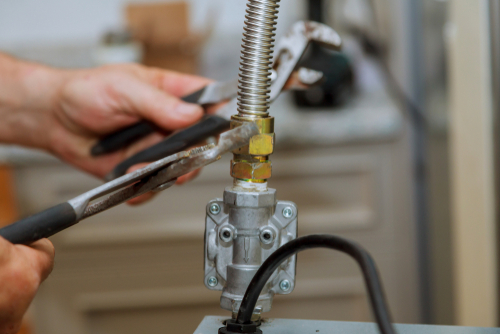
Natural gas powers water heaters, furnaces, stoves, dryers, and fireplaces in thousands of Indianapolis homes. It is efficient, affordable, and safe when everything is working properly. But when a gas line develops a leak – even a small one – it creates a serious safety hazard that requires immediate attention.
Most homeowners know the rotten-egg smell associated with gas leaks, but that is not always the first or only warning sign. Knowing what else to look for can protect your family and your home.
The Rotten Egg Smell
Natural gas is odorless in its natural state. Utility companies add a chemical called mercaptan that produces a strong sulfur or rotten-egg odor so leaks can be detected. If you smell this anywhere in your home – near the stove, water heater, furnace, or gas fireplace – take it seriously.
Do not try to locate the leak yourself. Do not turn on or off any electrical switches. Do not use your phone inside the house. Leave the home immediately, move at least 100 feet away, and call 911 or Citizens Energy Group’s emergency line from outside.
Hissing or Whistling Sounds
A pressurized gas line that develops a crack or loose connection will sometimes produce an audible hissing or whistling sound. The noise may be faint and easy to dismiss as background sound, but if you hear it near a gas appliance, near the meter, or along an exposed gas line in the basement or utility room, do not ignore it.
Dead or Dying Vegetation in Unusual Spots
If a gas line running underground to your home develops a leak, the gas displaces oxygen in the soil and kills plant roots. A patch of dead grass or dying shrubs in a line pattern across your yard – especially one that does not correspond to foot traffic, drainage, or sunlight patterns – could indicate a buried gas line leak.
Physical Symptoms in Your Household
Low-level gas exposure can cause headaches, dizziness, nausea, fatigue, and difficulty breathing. If multiple people in your home experience these symptoms and the symptoms improve after leaving the house, a gas leak should be investigated immediately.
The Indiana State Department of Health considers natural gas exposure a potential health risk, especially in homes with limited ventilation. Any combination of these symptoms alongside the smell of gas warrants evacuation and professional inspection.
Higher Than Normal Gas Bills
A slow gas leak may not produce a strong odor or audible hiss but will still show up on your utility bill. If your gas usage has increased without a corresponding change in habits or the addition of new appliances, a leak somewhere in the system is a possible explanation.
What to Do If You Suspect a Gas Leak
Leave the house immediately with everyone including pets. Do not operate light switches, appliances, or anything that could create a spark. Call 911 or Citizens Energy Group from a safe distance. Do not re-enter the home until emergency services have cleared it.
Once the immediate danger is addressed, a licensed plumber should inspect and repair the gas line before it goes back into service.
Gas Line Repair Is Not a DIY Job
Indiana law requires that gas line repairs be performed by licensed professionals. This is not something a handyman or general contractor should handle. Gas lines require pressure testing, leak detection equipment, and compliance with local codes to ensure safe operation after a repair.
DW Plumbing provides gas line repair and installation throughout Indianapolis and surrounding counties. Our plumbers are licensed (#PC12000081) and trained to work with both natural gas and propane systems.
If you have noticed any of the symptoms of a faulty gas regulator or have experienced low gas pressure in your home, those issues can also contribute to unsafe conditions and should be inspected.
Prevention Is the Best Protection
Have your gas appliances and gas lines inspected annually by a licensed plumber. Make sure you know where your gas shut-off valve is located – typically near the meter on the exterior of the house. Install carbon monoxide detectors on every level of your home and test them seasonally.
Call DW Plumbing at 317-500-1009 to schedule a gas line safety inspection. We respond 24/7 for emergency gas line issues and provide upfront pricing on all repairs.