If you have lived in Indianapolis for any length of time, you have seen the effects of our water on your home – white crusty buildup on faucets, spots on glassware, dry skin after showering, and scale inside your water heater. Indianapolis water consistently ranks among the hardest in the Midwest, and the question most homeowners eventually ask is: do I need a water softener, a water filter, or both?
The answer depends on what problems you are trying to solve.
What a Water Softener Does
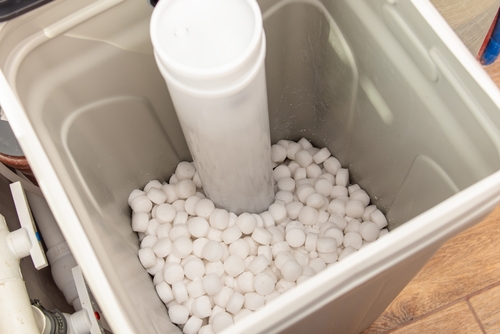
A water softener specifically targets hardness minerals – calcium and magnesium – using an ion exchange process. Hard water passes through a resin bed that swaps calcium and magnesium ions for sodium or potassium ions, producing soft water that does not leave scale deposits.
In Indianapolis, where water hardness ranges between 15 and 25 grains per gallon depending on your source and neighborhood, a softener addresses the most common and visible water quality complaints. We covered the specifics of Indianapolis water hardness levels and what they mean for your plumbing in a previous post.
What a softener does well: eliminates scale buildup on fixtures and inside pipes, improves soap lathering, extends the life of your water heater and other appliances, and reduces the calcium buildup on your faucets that drives homeowners crazy.
What a softener does not do: remove chlorine, lead, sediment, bacteria, PFAS, or other contaminants. It addresses hardness only.
What a Water Filter Does
A water filtration system targets dissolved contaminants, particulates, chemicals, and microorganisms depending on the type of filter installed. Options range from basic sediment filters and carbon filters to reverse osmosis systems and whole-house multi-stage filtration.
The U.S. Environmental Protection Agency sets maximum contaminant levels for public water systems, and Citizens Energy Group publishes annual water quality reports for the Indianapolis service area. While the city’s water meets federal standards, many homeowners want additional filtration for taste, odor, chlorine, or specific contaminants that federal standards allow at trace levels.
What a filter does well: removes chlorine taste and odor, reduces sediment and particulates, can remove lead and other heavy metals depending on the system, and improves the overall quality and taste of drinking water.
What a filter does not do: remove hardness minerals. Your faucets and water heater will still accumulate scale with a filter alone.
When You Need Both
Most Indianapolis homes benefit from both a water softener and a filtration system working together. The softener handles the hardness that damages your plumbing and appliances. The filter handles the contaminants that affect your drinking water quality.
A common configuration is a whole-house softener paired with an under-sink reverse osmosis system for the kitchen. This gives you soft water throughout the house and purified drinking water at the tap without the expense of running a full reverse osmosis system for the entire home.
How Hard Water Damages Your Plumbing Over Time
The connection between hard water and plumbing damage is not hypothetical in Indianapolis – it is something plumbers here see every week. Scale deposits narrow the inside of pipes, reduce water flow, and accelerate corrosion in older galvanized and copper systems. Inside water heaters, sediment from hard water settles on the bottom of the tank, reduces efficiency, and shortens the unit’s life.
We covered the downstream effects of this in our posts on sediment in your pipes and whether sediment in a hot water tank is dangerous. The short answer: it costs you money every month you do not address it.
What About a Whole-House Water Filtration System
DW Plumbing installs whole-house water filtration systems that can be configured to address hardness, sediment, chlorine, and specific contaminants based on what your water test reveals. We always recommend starting with a water test so the system is sized and configured for your actual water chemistry rather than a one-size-fits-all approach.
The Bottom Line
If your primary complaints are scale buildup, spotted dishes, dry skin, and appliance wear, a water softener is the priority. If your concern is contaminant removal, taste, and drinking water quality, a filtration system is the priority. If you want to protect both your plumbing and your health – which most Indianapolis homeowners do once they understand the water here – a combined system is the right move.
Call DW Plumbing at 317-500-1009 to schedule a water quality evaluation. We will test your water, explain what we find, and recommend the right system for your home – no guessing, no upselling.