Indianapolis has some of the most character-rich neighborhoods in the Midwest – Herron-Morton, Woodruff Place, Old Northside, Irvington, Fountain Square, Meridian-Kessler, and Broad Ripple – with homes dating back to the late 1800s through the 1960s. The architecture is stunning. The craftsmanship is solid. The plumbing, in many cases, is a ticking time bomb.
If you own or are buying an older Indianapolis home, here are the plumbing issues that are most likely hiding behind the walls, under the foundation, and beneath the yard.
Galvanized Steel Supply Lines
Homes built before 1960 frequently have galvanized steel water supply lines. These pipes were considered standard at the time, but their lifespan is roughly 40 to 70 years. Every galvanized pipe in a pre-1960 Indianapolis home has exceeded its expected life.
The problem develops from the inside out. Corrosion builds up layer by layer, narrowing the pipe diameter and restricting water flow. By the time you notice low water pressure, discolored water, or metallic taste, the inside of the pipe looks nothing like the outside.
The permanent solution is a full repiping with modern copper or PEX tubing. This restores full water pressure, eliminates the corrosion problem, and often increases home value – especially relevant in competitive Indianapolis neighborhoods where buyers scrutinize inspection reports.
Clay Sewer Lines
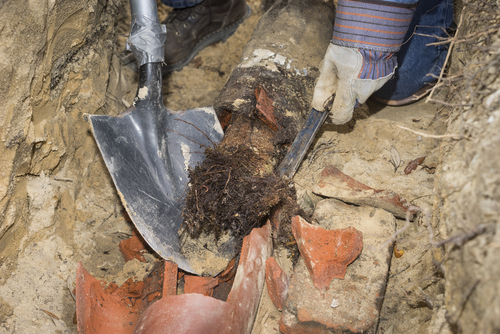
Most homes in Marion County built before the 1970s were connected to the city sewer system with vitrified clay pipe. Clay was durable for its era, but after 50-plus years underground in Indianapolis soil, these pipes crack, separate at joints, and become highways for tree roots.
If your home has original clay sewer lines and mature trees anywhere near the sewer path, root intrusion is not a matter of if – it is a matter of when. A sewer camera inspection can show you the condition of the line in real time and determine whether cleaning will buy you more time or replacement is needed.
We covered the specific signs of structural failure in our post on signs of a collapsed sewer line in Indianapolis.
Cast Iron Drain Stacks
Older Indianapolis homes often have vertical cast iron drain stacks – the main vertical pipe that collects drainage from upper-floor fixtures and feeds it to the sewer line. Cast iron in Central Indiana typically lasts 60 to 80 years before the walls thin from corrosion and start leaking.
Signs of a failing cast iron stack include water stains on the ceiling below a second-floor bathroom, smelly drains that persist after cleaning, and visible rust or pitting on the exposed sections of the pipe in the basement.
Outdated Fixture Shut-Off Valves
Older homes frequently have original gate valves under sinks, behind toilets, and at the water heater. These valves corrode internally over time and often seize in the open position. When you actually need to shut off water to a fixture in an emergency, a stuck valve turns a minor issue into a major one.
Replacing old gate valves with modern quarter-turn ball valves during routine residential plumbing service is one of the easiest and most impactful upgrades for an older home.
Polybutylene Pipe
Homes built between the late 1970s and early 1990s – particularly in Indianapolis suburbs that were developing during that period, including parts of Lawrence, Greenwood, and Franklin Township – may have polybutylene (poly-B) supply lines. This gray plastic pipe was eventually removed from the market due to a pattern of premature failures. It becomes brittle over time and can crack without warning.
If your home has polybutylene pipe, replacement is not a matter of preference – it is a matter of risk management.
Lead Service Lines
Some of the oldest homes in Indianapolis, particularly in Mile Square, Old Northside, and other near-downtown neighborhoods, may still have lead service lines connecting the house to the city water main. The Indiana Finance Authority oversees lead service line identification and replacement statewide, and homeowners can check whether their property is affected.
Inside the home, lead solder on copper pipe joints was common through 1986. A water filtration system with lead reduction capability can provide immediate protection while longer-term replacement is planned.
Get a Professional Assessment Before Problems Start
The smartest investment an older-home owner in Indianapolis can make is a comprehensive plumbing inspection. Not just the surface stuff – a real evaluation that includes camera inspection of the sewer line, pressure testing on the supply system, and a review of every visible pipe, valve, and connection.
DW Plumbing specializes in residential plumbing across Indianapolis and the surrounding counties. We understand the unique challenges of the housing stock here because we work in these homes every day.
Call 317-500-1009 to schedule an inspection of your older Indianapolis home. We will tell you exactly what is going on – and what is worth addressing now versus monitoring for later.