A water-heater temperature-and-pressure relief valve may drip because pressure rises during a heating cycle, household water pressure is too high, the water is overheating, or the valve seat is worn or obstructed by mineral debris. A few drops and a continuous hot flow are not the same condition, but neither should be stopped by blocking the discharge tube.
Never cap, plug, crimp, reduce, or submerge the relief-valve discharge tube. The valve is a safety outlet. Blocking it can trap dangerous pressure inside the tank. Do not lift the test lever while the heater is hot, pressurized, or already discharging; the released water can cause severe burns, and an older valve may not reseal.
If water is flowing continuously, feels visibly steamy, sprays, hisses forcefully, or appears unusually hot, keep people away from the discharge area. Do not touch the water or valve. Turn off the heater’s energy source only if the control is dry, safely accessible, and familiar to you. Otherwise, leave the area clear and request professional help.
What the Relief Valve and Discharge Tube Do
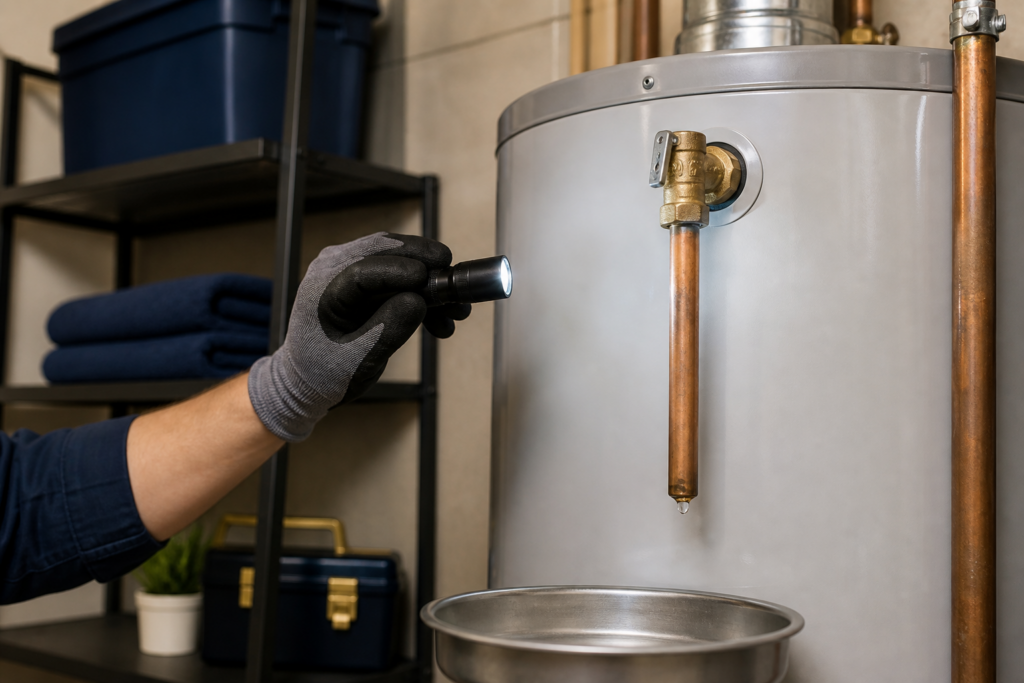
The temperature-and-pressure relief valve, often shortened to T&P valve, is normally installed near the top of a tank-style water heater. Its job is to open if temperature or pressure reaches an unsafe condition. The attached discharge tube directs released water downward so it does not spray from the valve body.
The tube’s open end is part of the safety path. It should remain visible and unobstructed. A bucket, cap, threaded fitting, valve, or tightly sealed drain connection can conceal a continuing discharge or keep the safety device from releasing correctly. If a tray is used temporarily to protect a dry floor, the tube must stay above it rather than submerged in collected water.
A drip at the tube outlet proves that water passed through the valve, but it does not prove why. Replacing the valve without finding the cause can leave the new valve dripping or overlook a pressure or overheating problem.
Intermittent Drips Can Point to Thermal Expansion
Water expands as it heats. In some plumbing systems, that additional volume can move back toward the public supply. In a closed system, a check valve, backflow device, pressure-reducing valve, or other control may prevent that movement. Pressure can then rise during each heating cycle.
An expansion tank is designed to absorb some of that change. If the tank is missing, waterlogged, improperly charged, isolated, or undersized for the system, the T&P valve may release a small amount of water as the heater recovers. The drip may appear after showers, laundry, or another period of heavy hot-water use and stop after the cycle ends.
That timing is useful, but it is not a diagnosis. A plumber can compare cold and heating-cycle pressure, inspect the expansion-control arrangement, and determine whether the relief valve is responding to pressure or simply failing to seal.
High Household Water Pressure Can Keep the Valve Wet
The pressure entering a home can change with utility conditions, elevation, pressure-reducing equipment, and demand in the neighborhood. A failed or incorrectly adjusted pressure-reducing valve may allow pressure to stay high throughout the plumbing system. The relief valve can then drip even when the heater itself is operating normally.
Other clues may include forceful fixture flow, banging pipes, brief toilet-fill noises, faucet or appliance-valve wear, or pressure that changes noticeably during the day. Those symptoms can have other causes, so they should be reported rather than used to adjust equipment without testing.
Do not turn an unfamiliar regulator screw or install a higher-rated relief valve to stop the water. The relief valve must match the heater’s listed requirements. The correct repair depends on measured system pressure and the condition of the pressure-control components.
Overheating Requires Prompt Attention
The T&P valve also protects against excessive temperature. A thermostat, gas control, electric heating element, wiring fault, or other control problem may allow the water to become hotter than intended. Continuous discharge that is visibly steaming or accompanied by unusually hot water at fixtures is more urgent than a cool, occasional bead.
Do not use a bare hand to check the discharge temperature. Keep children, pets, and stored belongings away from the outlet. Do not close the cold-water supply or drain the tank as an improvised way to silence the valve unless a qualified professional directs the exact steps for that heater and condition.
If the heater makes loud boiling, rumbling, or hissing sounds, the tank feels unusually hot from a safe distance, or the discharge continues after the energy source is off, stay clear and arrange service. Those observations help the technician evaluate the controls, stored-water temperature, sediment, and relief system without relying on guesswork.
Mineral Debris or a Worn Valve Seat May Cause a Slow Drip
Mineral particles can settle on the valve seat and keep it from sealing fully. The spring, seal, or internal surfaces can also wear with age. In that situation, the water may be at a normal temperature and system pressure may test correctly, but a steady bead still forms at the discharge tube.
Do not repeatedly operate the lever to flush debris from the seat. Hot water can discharge immediately, and a corroded valve may leak more afterward. A professional can isolate and cool the heater as required, confirm the valve specifications, and replace the component safely if testing shows the valve itself is defective.
Sediment elsewhere in the heater does not automatically cause a relief-valve leak, but maintenance history helps complete the evaluation. D.W. Plumbing’s water-heater flushing guidance explains why tank condition and maintenance intervals depend on the equipment and water conditions.
Safe Observations to Record
Useful details can be collected without touching the valve or discharge water:
- Note whether the outlet shows an occasional bead, a steady drip, or continuous flow.
- Record when it happens: during heating, after heavy hot-water use, at all times, or only at certain hours.
- Listen for hissing, rumbling, popping, or unusual burner or element cycling.
- Check whether hot water at normal fixtures seems noticeably hotter than usual without placing a hand under scalding water.
- Look from a dry distance for corrosion, mineral residue, a wet valve body, or water beginning higher than the tube outlet.
- Note whether the discharge ends above a floor drain, pan, or open air gap, and whether anything blocks or submerges it.
- Record recent work involving a pressure regulator, backflow device, expansion tank, water main, or heater control.
Photographs taken from a dry, safe position can help document the valve body, pipe route, residue, and drip pattern. Do not move insulation, remove access panels, open wiring compartments, or stand in water to get a closer view.
What Not to Do to Stop the Water
Do not attach a cap, threaded plug, shutoff valve, reducer, hose, or clamp to the discharge line. Do not bend or pinch the tube. Do not route it upward, seal it into a drain, or allow its end to sit under water.
Do not assume a pan or towel makes the condition safe. Absorbent material can hide the amount of discharge, remain in contact with hot water, or keep the area wet. Move dry belongings away if the path is safe, but leave the safety outlet visible.
Do not replace the relief valve with a different rating, reuse an unknown valve, or apply sealant to internal moving parts. Do not raise or lower heater settings in an attempt to diagnose an unfamiliar control problem. Any repair should preserve the heater manufacturer’s requirements and the valve’s approved discharge path.
When the Heater May Need More Than a Valve Replacement
Water around the base of the heater, rust from the tank seam, repeated overheating, discolored hot water, or a history of multiple repairs may point to a broader equipment problem. A sound T&P valve cannot repair a leaking tank or failing control.
The heater’s age is one factor, but condition matters more than a calendar rule. D.W. Plumbing’s overview of water-heater replacement warning signs can help you organize the symptoms to report. A plumber can then compare the cost and safety of a focused repair with replacement based on the actual tank, controls, venting, connections, and installation.
What a Condition-Led Diagnosis Includes
A complete inspection starts with the drip pattern and the condition of the discharge path. The plumber may measure static household pressure, watch pressure during a heating cycle, evaluate thermal-expansion control, and verify water temperature with appropriate instruments.
The valve body, rating, corrosion, seat condition, and connection can then be evaluated. The inspection may also include the thermostat or gas control, heating elements, expansion tank, pressure-reducing valve, check or backflow devices, and signs of tank deterioration. Gas, electrical, venting, and combustion work should remain within the qualified scope for the specific heater.
This sequence matters because a new valve may leak again if high pressure or overheating remains. It also avoids replacing the entire heater when a correctly diagnosed pressure-control or valve repair is sufficient.
D.W. Plumbing provides water-heater repair, replacement, and installation in Indianapolis. Describe whether the discharge is intermittent or continuous, when it begins, and whether the water appears steamy or the heater sounds unusual.
Request Water-Heater Service in Indianapolis
Keep the discharge tube open and the area clear. Request service promptly if the drip repeats, the valve or tube has heavy corrosion, the heater is unusually hot, or pressure-related symptoms appear elsewhere in the home. Treat continuous hot or forceful discharge as an urgent safety condition and stay away from the outlet.
Contact D.W. Plumbing with the heater type, the drip timing, visible residue, recent plumbing changes, and any unusual sounds or temperature changes. Those details support a safer distinction among thermal expansion, high pressure, overheating, and a valve that no longer seals.