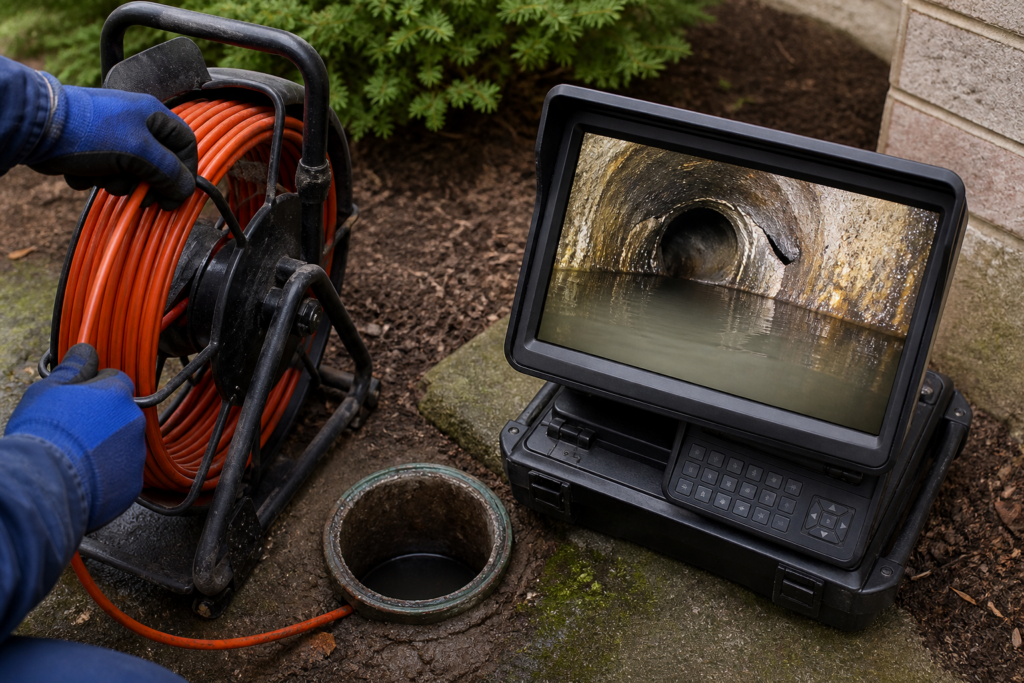
Yes, sometimes—but an obscured view has limits. A waterproof sewer camera may still show where standing water begins, how the water moves, exposed pipe above the waterline, or an obvious obstruction. Cloudy or deep water can hide the lower pipe wall and defects beneath the surface. The camera passing through does not mean the entire section was clearly seen.
When standing water prevents a useful view, a plumber may need to restore flow or clean the line before making a second pass. That follow-up can expose surfaces the first pass could not show, but it is not conclusive by itself.
What Standing Water Changes on the Camera Screen
A sewer camera carries its own light, but that light works best with a clear path to the pipe wall. In standing wastewater, suspended material can reflect light toward the lens. The picture may become cloudy or dark, and even relatively clear water can distort detail.
The water may cover only the pipe bottom or surround the camera. The upper wall may remain visible while the lower wall disappears. Image quality can shift as the camera moves, so one clear frame does not represent the whole section.
The inspection may still locate the obscured area, show water movement, and document exposed surfaces. The plumber should separate what was visible from what remains unconfirmed.
Physical Passage and a Clear View Are Different Findings
A camera head is pushed through the line on a flexible cable. If it moves beyond a wet section, the passage was open enough for that camera at that moment. That does not establish full carrying capacity, an intact wall, or the absence of a restriction below the water.
If the camera stops, the screen may not show why. Access, a bend, material in the line, or a pipe change can affect movement. Forcing the equipment is not a safe way to resolve uncertainty.
When a homeowner hears, “The camera went through,” the next question is whether the operator had a clear, continuous view. If the lens stayed submerged or the water remained cloudy, damage below the waterline may still be hidden.
What the Camera May Still Reveal
The footage may still show:
- Where the water begins to obscure the pipe wall.
- Whether the water appears still or moves.
- The upper portion of the pipe when it remains above the waterline.
- Material or an obstruction that projects into the visible area.
- Whether the camera can physically move through the affected section without being forced.
These are observations, not promises. A plumber should describe what the footage supports and identify any section that was not clearly visible.
D.W. Plumbing’s sewer camera inspection service in Indianapolis can help investigate recurring sewer and drain concerns when the condition inside the line remains uncertain.
What Standing Water Can Hide
The main limitation is the pipe surface below the waterline. A small crack, joint problem, localized deterioration, or material along the bottom may not be distinguishable through cloudy water. The camera cannot reliably document a wall it cannot illuminate clearly.
An obscured first pass should not rule out damage in the hidden area. It may narrow the investigation or reveal an obstruction, but it does not establish the condition of covered surfaces. The operator needs enough continuous visibility to evaluate the relevant section.
Standing water does not prove the exact defect. Why it remained and whether it changes with fixture use may require more observation. Treating the water level as a diagnosis can lead to the wrong repair.
Why Restoring Flow May Come Before a Second Pass
If material prevents normal drainage, the camera may document the water and then reach the limit of what it can show. The next step may be to restore flow with a cleaning method chosen for the line’s access and condition. The purpose is to lower the water and expose the hidden surface for inspection.
Cleaning should not be forced through an unknown condition. Homeowners should not insert rental equipment, rods, or chemicals to create a camera path. The wrong approach can damage the pipe, lodge equipment, or expose people to wastewater.
After flow improves and the water drops, a second pass can revisit the same section. The operator can examine the newly exposed wall and check whether the visibility problem cleared. Some conditions may still remain out of view.
What a Second Camera Pass Can Clarify
A second pass asks what can be seen now that could not be seen before. The plumber may compare where water began, the newly exposed pipe, and the camera’s ability to move through the section.
If the wall becomes visible, the footage may support a more specific repair decision. If water returns, visibility remains poor, or the camera cannot safely reach the section, the limitation should be documented. Another access point or diagnostic step may be needed.
Footage also needs context. Fixture behavior, where wastewater appeared, service history, and changes after flow restoration help determine whether the video explains the concern.
See how sewer camera findings support repair decisions. An obscured section should remain unconfirmed until enough evidence exists to assess it.
Safe Observations to Share With the Plumber
Homeowners can help without opening a cleanout or clearing the line. Note which fixtures are affected and what happened just before the symptom, such as a flush, shower, laundry discharge, or several fixtures used close together.
Note whether the problem is constant or intermittent, whether drainage returns after the home sits unused, and where wastewater appeared. Share the date and findings from any prior cleaning or inspection.
Do not remove a cleanout cap; a backed-up line can release wastewater when loosened. Do not stand in contaminated water, reach into a drain, or use electrical equipment near a wet area. Take photos only from a dry, safe position.
When to Reduce Water Use and Arrange Service
If wastewater is backing up indoors, stop adding unnecessary water. Avoid laundry, dishwashing, showers, or repeated test flushes. Continued use can raise the water level and spread contamination.
Arrange prompt service when several fixtures drain slowly together, a lower drain receives wastewater when another fixture runs, a backup repeats, or sewage enters the home. Keep people and pets away. Do not enter wet areas near outlets, appliances, or electrical panels.
A camera inspection may follow an evaluation of access and flow. If standing water blocks the view, let that condition guide the next safe step instead of testing fixtures again or improvising a way through the line.
What a Condition-Led Inspection Should Verify
The plumber needs safe access and a clear symptom history. During the pass, the operator can note where visibility changes, whether the lens is submerged, how the water behaves, which surfaces remain exposed, and whether the camera advances without force.
Findings should separate confirmed observations from hidden areas. “The upper wall is visible” and “the lower wall is obscured” are more useful than a broad conclusion that the pipe looks fine. A follow-up pass should return to the same section and document what changed.
Recommendations should reflect the visible condition, unresolved limits, drainage symptoms, and response after flow is restored—not one unclear image.
Request a Sewer Camera Inspection in Indianapolis
Standing water does not necessarily end an inspection, but it limits what footage proves. If recurring drainage trouble, a backup, or an incomplete camera view leaves the pipe condition uncertain, arrange an assessment before assuming the hidden section is sound.
Contact D.W. Plumbing with the affected fixtures, timing, backup history, and any obscured prior footage. Those details help determine whether flow must be restored before a clearer second pass.
Frequently Asked Questions
Can a sewer camera move through standing water?
It may. Sewer cameras are waterproof, and the head may continue through water if the passage is open enough for the equipment. Movement alone does not establish that the picture was usable. Cloudy water can hide the wall even while the camera advances. The operator should report both facts separately: how far the camera traveled and which portions of the pipe were clearly visible.
Does standing water prove that the pipe is damaged?
No. Standing water shows that water remained in the inspected section at that time, but the image alone may not establish why. The plumber may need to compare the water’s location and behavior with drainage symptoms, access conditions, and what becomes visible after flow is restored. Repair decisions should not rest on the water level alone.
Should the line be cleaned before the camera inspection?
Not necessarily. An initial camera pass may provide useful information about where visibility changes or what is obstructing the view. If water or material prevents a responsible assessment, cleaning or restoring flow may be the next step before a second pass. The sequence should be chosen for the actual line rather than assumed in advance.
Can one camera pass rule out hidden damage?
Only the surfaces shown clearly can be evaluated from that footage. If the lower wall stays underwater or the picture is clouded by suspended material, defects in that area may remain unconfirmed. A second pass after the water drops may reveal more, but persistent poor visibility should be documented instead of treated as proof that no problem exists.
What should I do while waiting for an inspection?
If drainage is normal and there is no backup, avoid opening cleanouts or attempting to clear the sewer yourself. If wastewater is backing up or several fixtures are affected, reduce water use and keep people away from contaminated areas. Tell the plumber where water appeared, which fixtures were involved, and whether the condition changes after the plumbing sits unused.