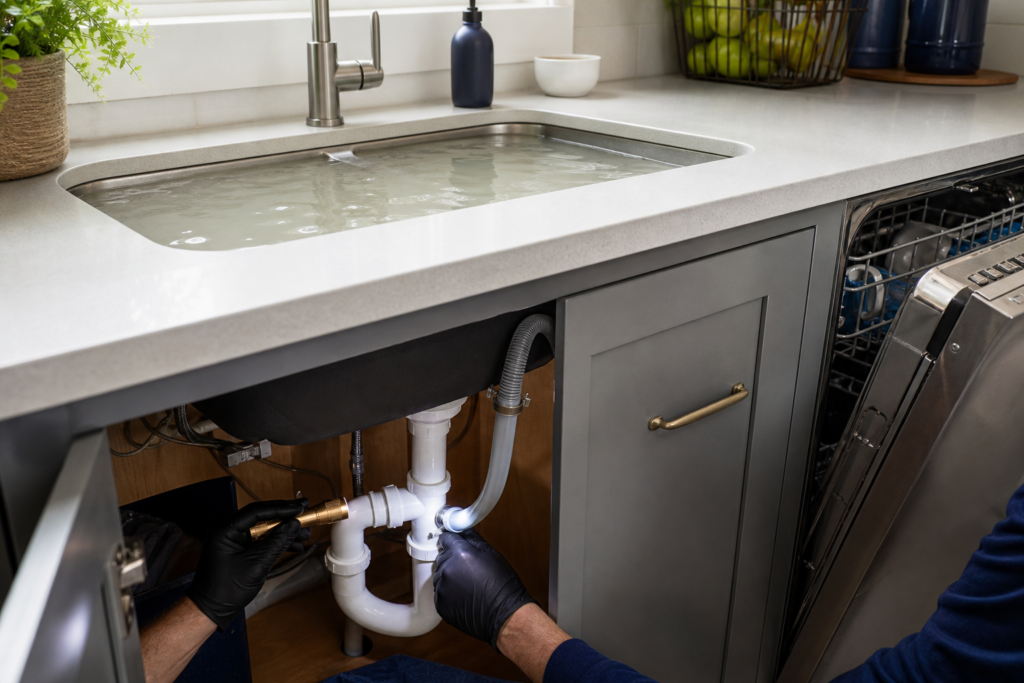
If water rises in the kitchen sink when the dishwasher drains, the dishwasher is pushing water into a drain path that cannot carry it away fast enough. The restriction may be at the dishwasher connection, inside a garbage disposal, in the sink trap, or farther down the kitchen branch line. The dishwasher often reveals the problem because it releases a concentrated flow of water in a short period.
Stop the cycle if the water keeps rising or threatens to spill over the sink. Avoid running the sink or disposal until the water level drops. Repeatedly forcing more water into a restricted line can spread dirty water across the counter, cabinet, or floor.
The Dishwasher and Sink Usually Share a Drain Path
Most dishwashers send wastewater through a hose connected to a garbage disposal or a branch fitting on the sink drain. From there, the water passes through the trap and into the kitchen drain line.
That shared path explains why a dishwasher problem can appear in the sink. If the drain downstream is partially clogged, the water follows the easiest available route. It may rise through the sink drain rather than continue through the restriction.
A Partial Kitchen Drain Clog Is a Common Cause
Grease, food particles, soap residue, and other buildup can gradually narrow the kitchen drain. The sink may still empty during light use, which makes the line appear normal. When the dishwasher pumps out, the larger burst of water exceeds the remaining capacity and backs up into the basin.
Slow sink drainage between dishwasher cycles, gurgling, or a backup that worsens over time supports the possibility of a partial clog. The restriction may be close to the trap or deeper in the branch line.
The Garbage Disposal May Be Restricting Flow
When the dishwasher hose connects to a garbage disposal, wastewater must pass through the disposal before entering the drain. Food buildup, a jam, or a restricted discharge opening can slow that flow.
A disposal that drains slowly even when it is not running deserves attention. Turn it off and do not place your hand inside. A plumber can isolate power, check the disposal and connection safely, and determine whether the restriction is in the appliance, the outlet, or the drain beyond it.
If a dishwasher was recently installed or reconnected to a disposal, the connection itself should also be checked. Installation details can affect whether water has a clear route into the drain.
The Dishwasher Hose Can Add to the Problem
The drain hose should be routed to help prevent wastewater from returning toward the dishwasher. A kinked, crushed, sagging, or poorly connected hose can restrict discharge or allow dirty water to move in the wrong direction.
A hose problem alone is more likely to leave water inside the dishwasher than to fill the sink. However, hose routing and the shared drain should be evaluated together when both appliances show symptoms.
Do not disconnect the hose during or immediately after a cycle. It may contain hot, dirty water that can release suddenly.
The Trap May Need Inspection
The curved trap beneath the sink holds water to block sewer gases. It can also collect dense debris. If the sink is slow during ordinary use and backs up sharply during dishwasher discharge, the trap may be restricted.
Opening a trap can spill standing water and expose the cabinet to damage. A professional can protect the work area, check the trap, inspect adjoining fittings, and clear the correct section without guessing.
A Deeper Branch-Line Clog Can Affect More Than the Sink
If the trap and appliance connections are clear, the restriction may be farther along the kitchen branch. A plumber can use appropriate drain-cleaning equipment to restore the line and confirm flow.
Pay attention to other nearby fixtures. If a laundry drain, floor drain, or another sink also gurgles or backs up, the problem may extend beyond the kitchen connection. Multiple affected fixtures can point to a larger drain or sewer issue that needs broader diagnosis.
What You Can Check Safely
Without opening pipes or reaching into a disposal, note:
- Whether the sink is slow when the dishwasher is off.
- Whether one or both sink bowls fill.
- Whether the disposal hums, drains slowly, or remains silent.
- Whether water stays inside the dishwasher after the cycle.
- Whether another fixture gurgles or backs up.
- Whether the problem began after appliance or plumbing work.
Those details help identify the likely location of the restriction. Avoid chemical drain cleaners. They may remain trapped in standing water and expose anyone who later opens or clears the line.
What Professional Drain Service Can Determine
A plumber can inspect the dishwasher hose connection, disposal outlet, sink trap, and branch drain in sequence. The goal is to find the restriction instead of clearing only the easiest accessible fitting.
After the blockage is removed, the sink and dishwasher can be tested through a full discharge. If the backup returns or the line has repeated problems, a camera inspection may help identify damage, heavy buildup, or another condition deeper in the drainage system.
Schedule a Kitchen-Drain Inspection
If your kitchen sink backs up whenever the dishwasher drains, contact D.W. Plumbing for drain diagnosis in the Indianapolis area. The connected hose, disposal or branch fitting, trap, and kitchen drain can be checked to locate the restriction and restore proper flow.